What Animals Will You See on a Maasai Mara Photo Safari?

What Animals Will You See on a Maasai Mara Photo Safari?
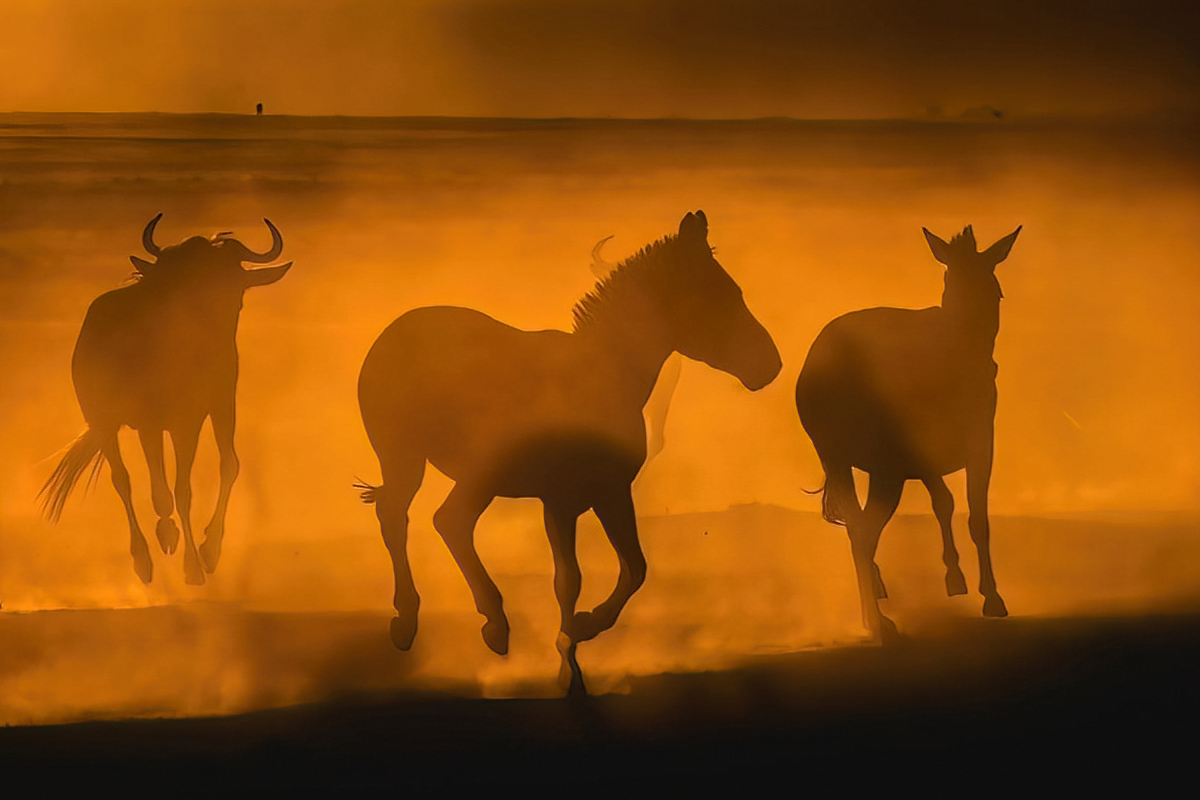
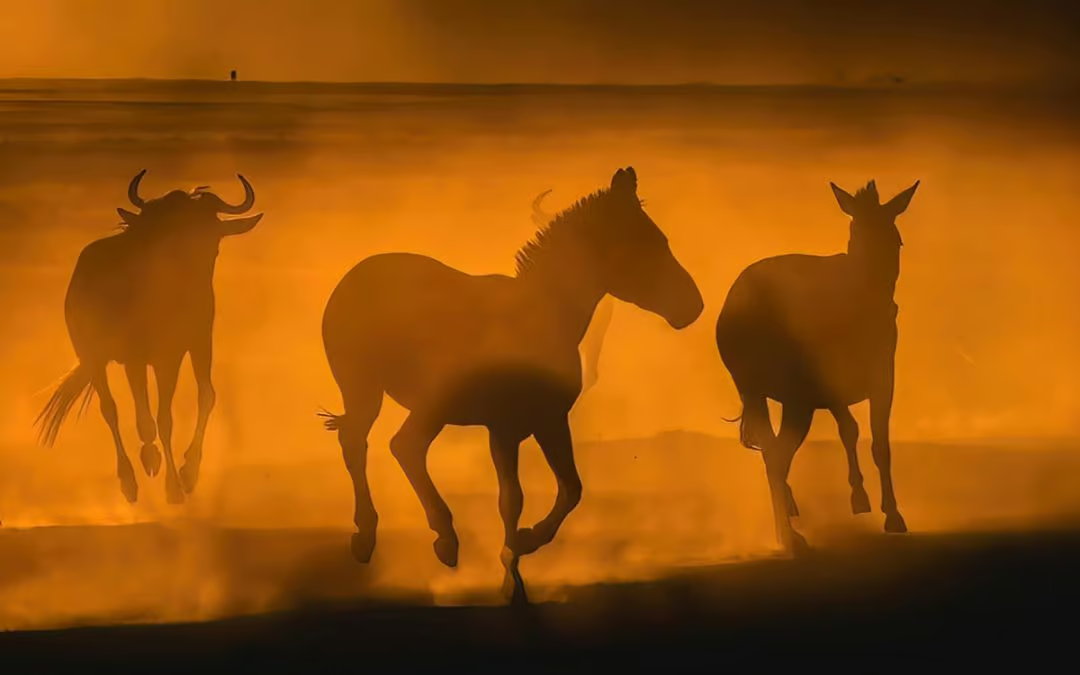
Sunrise Zebras

The Maasai Mara National Reserve stands out as one of Africa’s most spectacular wildlife photography destinations. You’ll find an incredible diversity of animals across the sweeping savannahs.

On my Maasai Mara photo safari, you can expect to have a good chance of seeing the Big Five (lions, elephants, leopards, buffalo, and rhinos), along with cheetahs, giraffes, zebras, wildebeest, hippos, crocodiles, and over 450 bird species throughout the year. The open grasslands and acacia woodlands make spotting and photographing these magnificent creatures surprisingly accessible, and an 8-day photo safari presents many opportunities.

One of the things that sets the Maasai Mara apart is the Great Migration spectacle, when millions of wildebeest and zebra travel from Tanzania’s Serengeti between July and October.

During these months, predators follow the herds, creating dramatic hunting scenes and river crossings. If you want once-in-a-lifetime photographic opportunities, this is the time to go.

Even outside migration season, the Maasai Mara teems with resident animals. I’ve often watched everything from massive elephant herds to leopards lounging in fever trees, no matter when I visit.

Key Takeaways

  • The Maasai Mara is home to the Big Five plus cheetahs, giraffes, zebras, and hundreds of bird species for year-round photography opportunities.
  • The Great Migration from July to October brings countless wildebeest and zebra, creating the most dramatic wildlife spectacle on earth.
  • Expert guides and diverse habitats ensure exceptional animal sightings, whether you visit during migration season or throughout the rest of the year.

The Big Five of Maasai Mara

The Big Five animals in Maasai Mara include lions, massive elephants, elusive leopards, dangerous buffalo, and critically endangered black rhinos. These iconic species are the most sought-after wildlife encounters during game drives, and rhino’s can be some of the most difficult to find.

Lion: King of the Grasslands

Lions really are the stars here—they rule the Maasai Mara grasslands in large, social groups. The 850 to 900 lions living in the conservancies make this one of Africa’s best places for lion viewing.

Pride Structure:

  • Males: 2-3 adult males per pride
  • Females: 10-15 related females
  • Cubs: Various ages, cared for communally

Lions live in complex prides where females do most of the hunting, while males defend the territory from rivals.

During the heat of the day, we often spot lions resting under acacia trees. They tend to get active around dawn and dusk when it’s cooler.

Best Viewing Times:

  • Early morning: 6:00-8:00 AM
  • Late afternoon: 4:00-6:00 PM
  • Evening: 6:00-7:00 PM

Lions mainly hunt large ungulates like zebras, wildebeest, and gazelles. Their teamwork during hunts is impressive and often leads to dramatic moments on the savannah.

African Elephant: Gentle Giants

African elephants are the largest land mammals on Earth. I’ve watched these giants use their trunks—packed with over 40,000 muscles—for everything from drinking to communicating.

Physical Features:

  • Weight: Up to 6,000 kg
  • Height: 3-4 metres at shoulder
  • Tusks: Used for digging and defence
  • Ears: Large for heat regulation

Elephants live in matriarchal societies led by the oldest female. Family herds move single file, with mothers keeping calves safe in the middle.

These gentle giants can eat up to 300 kg of vegetation a day. It’s wild to see how much they shape the landscape, creating paths and water holes that other animals use.

Elephant Behaviour I’ve Observed:

  • Mud bathing for sun protection
  • Trunk greeting between family members
  • Teaching young calves to use their trunks

Elephants show the most activity in the early morning and late afternoon. We often find them near the Mara River, drinking and socialising.

Leopard: Elusive Beauty

Leopards are by far the trickiest of the Big Five to photograph. These solitary, nocturnal cats love dense bush, where their spots blend in perfectly.

Leopards prefer early mornings and dusk. They’re insanely strong climbers and will stash kills in trees to keep them safe from scavengers.

Leopard Characteristics:

  • Hunting style: Ambush predator
  • Prey: Small antelopes, birds, rodents
  • Territory: Solitary and territorial
  • Adaptability: Thrive in various habitats

These cats move with incredible stealth and power. Watching a leopard drag prey up a tree is something you don’t forget.

Best Photography Tips:

  • Use telephoto lenses (400mm minimum)
  • Focus on tree branches during rest periods
  • Watch for movement in dappled shadows
  • Be patient and quiet during sightings

Buffalo and Rhino: Formidable Forces

Cape buffalo and black rhinos are the most dangerous of the Big Five. We always approach both species with serious caution—they’re unpredictable and fiercely defensive.

Cape Buffalo Facts:

  • Travel in herds of 50-500 individuals
  • Weigh up to 900 kg
  • Known as Africa’s most dangerous animal to humans
  • Require daily water access

Buffalo have incredible memories and can charge without warning. Massive herds move across the plains, kicking up dust you can see from far away.

Black rhinos in Maasai Mara are critically endangered, with fewer than 40 individuals left. They look almost prehistoric, with two horns and pointed lips for browsing shrubs.

Rhino Characteristics:

  • Weight: 800-1,400 kg
  • Diet: Leaves, shoots, thorny plants
  • Behaviour: Solitary and territorial
  • Vision: Poor eyesight, excellent hearing

Safety During Encounters:

  • Maintain minimum 25-metre distance
  • Never exit vehicles
  • Avoid sudden movements or loud noises
  • Respect their space and retreat routes

Both buffalo and rhino play big roles in the Maasai Mara ecosystem by shaping the landscape and dispersing seeds as they move and graze.

Other Predators and Iconic Wildlife

The Maasai Mara’s predators are some of nature’s most skilled hunters. From the lightning-fast cheetah to the complex social world of hyenas, these apex predators dominate the savannahs and grasslands.

They create dramatic photographic opportunities as they stalk and chase their prey.

Cheetahs: Masters of Speed

The fastest land animals love the Mara’s open plains and prefer areas with scattered acacia trees for a good lookout.

These spotted cats hunt during the day, making them perfect subjects for photographers. With their slender build and dark tear marks, you won’t mix them up with leopards.

Prime Cheetah Locations:

  • Open grasslands near the Mara River
  • Areas with termite mounds for elevated hunting positions
  • Plains with scattered acacia cover

Cheetahs rest in the shade during the hottest parts of the day. I suggest heading out early or late for the best sightings when they’re on the move.

Hyenas: Social Hunters

Spotted hyenas live in clans—big, complicated social groups. These predators have bone-crushing jaws that can break through the toughest remains.

I’ve seen hyenas both scavenging and hunting together. Their whooping calls echo across the plains, especially at dawn and dusk.

Hyena Behaviour Patterns:

  • Daytime: Rest in dens or shade
  • Evening: Begin hunting activities
  • Night: Most active period for hunting

Hyenas clean up what others leave behind, eating bones and hide. They’re nature’s ultimate cleanup crew.

These clever animals have a matriarchal society—females outrank all males.

Other Notable Predators

Beyond the famous big cats, the Mara hosts several other predator species that create exciting photographic opportunities. Wild dogs sometimes show up in the northern conservancies, but spotting them is rare.

Caracals and servals prowl the grasslands for smaller prey. These elusive cats reward patient photographers with unique shots if you’re lucky enough to find them.

Additional Predators to Watch For:

  • African wild dogs (rare)
  • Caracals and servals
  • Black-backed jackals
  • Various mongoose species

Jackals follow bigger predators to scavenge scraps. We sometimes see them near lion prides or at leopard kills, just waiting for a chance.

The Great Migration: Spectacle of the Savannah

The Great Migration brings over 1.5 million wildebeest and zebras through the Maasai Mara between July and October.

Wildebeest and Zebras on the Move

During my game drives in the Maasai Mara, I’ve seen countless wildebeest and zebras making this annual journey. The herds arrive from Tanzania’s Serengeti, forming endless columns across the savannah.

The timing is always fascinating—these animals follow seasonal patterns in search of fresh grazing and water. Wildebeest usually lead, with zebras often mixed in among them.

Peak season is just wild. I’ve seen herds stretching for kilometres, dust clouds billowing from thousands of hooves. The constant movement offers non-stop chances for action shots as the animals graze, mingle, and navigate the terrain.

Best Photography Times:

  • Early morning: Herds head to water sources
  • Late afternoon: Animals graze in golden light
  • Midday: Dust clouds and moving herds

Predator Interactions During Migration

The migration attracts a stunning range of predators. Lions track the migration herds, usually staking out river crossings and grazing zones.

Cheetahs take advantage of the abundance, going after young or weak animals. Leopards stay elusive but get more active during migration. Hyenas follow the herds too, always ready to scavenge or steal a kill and vultures circle overhead, making dramatic silhouettes against the sky.

Predator activity always ramps up near water, where exhausted migration animals get vulnerable.

Other Remarkable Mammals and Birds

The Maasai Mara is packed with iconic and lesser-known wildlife—towering giraffes feeding on acacias, massive hippos, ancient crocodiles in the rivers, and elusive nocturnal creatures like bat-eared foxes and aardvarks.

Giraffes and Their Unique Behaviours

The Maasai Mara is home to the striking Masai giraffe, easy to spot thanks to its jagged-edged patches and deeper colour. These gentle giants can reach 5.5 metres, making them the tallest mammals around.

On safari, I often see giraffes stripping leaves from acacia trees. Their 45-centimetre tongues let them snag leaves from even the thorniest branches.

Key giraffe behaviours to photograph:

  • Necking: Males swing their necks in territorial battles
  • Tower formations: Groups of giraffes create stunning compositions
  • Drinking postures: That awkward, wide-legged stance at waterholes

Hippopotamus and Crocodiles: River Dwellers

The Mara and Talek rivers are full of crocodiles and hippos. These waterways serve up some of the most dramatic wildlife photo moments in the reserve.

Hippos spend their days submerged, surfacing every few minutes to breathe. At night, hippos wander out to graze, sometimes up to 10 kilometres from water. Their jaws can snap a canoe in half—definitely not animals to mess with.

Nile crocodiles here can grow over 4 metres long. During migration, they are known to ambush wildebeest at river crossings.

Small Mammals and Nocturnal Species

The reserve hides all sorts of smaller species that most visitors miss. Bat-eared foxes are nocturnal and rare elsewhere in Kenya, so spotting them here feels special.

These foxes use their huge ears to find termites and beetle larvae underground. We were fortunate to spot them on our last 8-day safari!

Aardvarks are extremely elusive. They feed only on ants and termites, using pig-like snouts and powerful claws to dig into mounds all over the savannah.

The reserve is also home to around 470 bird species, like secretary birds, lilac-breasted rollers, and crowned cranes that stick around year-round.

Wildlife Habitats and Photo Safari Experiences

The Maasai Mara National Reserve offers everything from open grasslands to acacia woodlands, each with its own photo opportunities. Game drives and walking safaris let you explore these landscapes in different ways.

The Open Plains and Acacia Woodlands

The Maasai Mara’s habitats stretch from open grasslands and savannahs to acacia woodlands, offering perfect backdrops for wildlife shots. These landscapes support different animals at different times of day.

The open savannahs seem to go on forever. We find big herds of zebras, wildebeest, and gazelles grazing in the morning light.

Acacia trees dot the plains, giving shade to resting lions and leopards. They also make natural frames for wildlife photos.

The grasslands shift colour with the seasons. In the dry months, golden grass adds warmth to your images.

Best photography spots include:

  • Open plains near the Mara River
  • Scattered acacia groves
  • Rolling hills with sweeping views
  • Seasonal wetlands that draw in birds

Exploring the Reserve: Game Drives

Game drives are the main way to explore the Mara. My photo safaris run from dawn to dusk (with some rest time over lunch and early afternoon) to maximise wildlife encounters.

Early morning drives offer the best light. Animals are most active while it’s still cool.

Evening drives are all about golden hour, think sunsets and silhouettes! Predators often hunt at this time, so there’s a good chance for action shots.

I’d suggest doing several game drives in different areas of the reserve. Each spot has its own wildlife mix and scenery. That’s a big part of why I opted to make my photo safari’s 8 days long.

Game drive timing:

Time Best For Wildlife Activity
6:00-10:00 AM Golden light, active animals High
10:00 AM-3:00 PM Resting animals, harsh light Low
3:00-7:00 PM Golden hour, hunting High

Photography Tips for Capturing Wildlife

Camera settings change a lot with light and animal behaviour. Go for fast shutter speeds when animals are on the move, and slow things down if they’re just hanging out.

For action shots, set your shutter speed as fast as possible. That way, you can actually freeze the moment when something wild happens—like a chase or a sprint.

Portrait photography often feels better with a shallow depth of field. Use wide apertures like f/2.8 or f/4, which softens the background and really makes the animal pop, especially when you get their eyes in focus, looking straight at you.

Essential equipment includes:

  • Telephoto lens (300-600mm)
  • Sturdy tripod or a bean bag (I have photographers’ bean bags available on my photo safaris)
  • Extra batteries and memory cards
  • Lens cleaning kit for all the dust

Early mornings and late afternoons? That’s when the light is honestly at its best. Midday sun just makes everything look harsh and flat, so we usually take a break, get lunch and relax at the safari lodge.

Composition techniques make a huge difference. Use the rule of thirds, follow lines from acacia branches, and experiment with framing shots using leaves or grass.

Patience is everything out here. Animals do their own thing, so I’ve learned to wait for those real, unscripted moments.

Frequently Asked Questions

Most people heading to the Maasai Mara ask which animals they’ll get to photograph—and when. The reserve pretty much always delivers on the big stuff, though the vibe changes with the seasons.

Which species can be commonly spotted during a Maasai Mara photographic safari?

I see elephants, buffalo, giraffes, zebras, and all sorts of antelope every time I go. They’re around all year, in big numbers.

Lions show up a lot, too, usually snoozing under acacia trees when it gets hot.

Spotted hyenas are busy both day and night. You’ll usually find them near kills or grabbing a drink at the waterholes.

Hippos hang out in the Mara River pools during the day.

What are the prime wildlife photography opportunities in the Maasai Mara?

River crossings during the Great Migration are wild, especially from July to October. Wildebeest and zebras take their chances with the river while crocodiles wait below.

Predator hunts happen most in the early morning or late afternoon. Keep an eye out near likely prey when the light’s golden.

Mating behaviours and births happen all year, and February through April bring a bunch of newborns. Those are some of the most intimate moments to catch on camera.

Watering holes pull in a crowd during dry spells.

Are big cats like lions and cheetahs regularly seen on Maasai Mara safaris?

Lions are a permanent fixture in the Maasai Mara, with around 850-900 individuals. I see them on nearly every safari, especially near kopjes and riverine forests.

Cheetahs stick to open grasslands, so they’re a bit harder to find but we still spot them regularly.

Leopards? They’re the real hide-and-seek champs, usually tucked away in thick brush or rocky spots. The high concentration of leopards at Maasai Mara does mean we have a good change of spotting them.

Morning game drives are best for big cat photos. They’re up and about before the heat kicks in—usually before 10 AM.

What notable bird species might one encounter on a Maasai Mara safari?

The Maasai Mara has over 450 bird species. We often see raptors like secretary birds, martial eagles, and a mix of vultures.

Ostriches wander the plains in small groups. They’re massive and look incredible against the open savanna.

Lilac-breasted rollers love perching on acacia branches. Those colours are unreal—makes for a killer portrait.

Ground hornbills, crowned cranes, and bee-eaters are all over the place too. Migrant birds show up between November and April, which really boosts the variety.

How likely is it to see the ‘Big Five’ during a single Maasai Mara safari?

You will likely spot four out of the Big Five on most three-day safaris. Elephants, buffalo, lions, and leopards all live here in good numbers.

Black rhinos are the tricky ones. There are fewer than 70 in the reserve, so they’re tough to find and photograph.

If you can swing a longer trip, your odds go way up. That’s part of why my Maasai Marai photo safari’s are 8 days long, giving us a really good chance of spotting them all (plus many more)

What are the best months for wildlife photography in the Maasai Mara?

July through October brings the Great Migration—millions of wildebeest and zebras flood the plains.

January to March is great for general wildlife shots. The dry season leaves the grass short, so you’ll spot animals more easily.

April to June, everything turns lush and green. Fewer tourists are around, and you’ll catch a lot of newborns with their families.

December gets tricky. Heavy rains and thick vegetation make things tough, but if you’re after moody skies and quiet scenes, it might just be your month.

If you have a passion for African wildlife, nature or travel photography and would love to go on a specialised small-number, professional African photo safari, please get in touch with Michael Snedic at WildNature Photo Expeditions. You can call him on 0408 941 965 or fill in this Contact Form and he will get back to you ASAP.
Unleash the Beast: How To Take Great Wildlife Shots – 12 Tips

Unleash the Beast: How To Take Great Wildlife Shots – 12 Tips

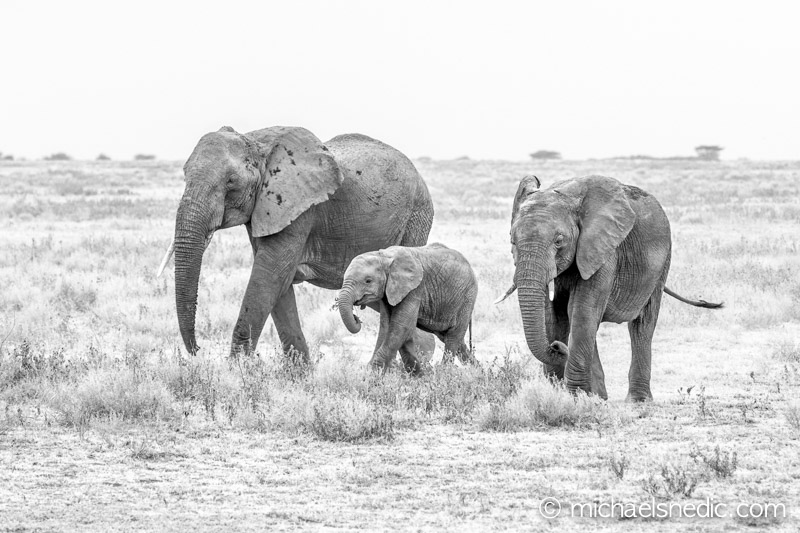
Elephants - Tanzania - Africa

Professional wildlife photographer and photo tour leader, Michael Snedic, shares his best tips for shooting stunning wildlife shots.

Wildlife photography is as challenging as it is rewarding. While wild animals are naturally interesting photographic subjects, they are also cunningly elusive and difficult to photograph! For most wildlife photographers, the road to success follows thousands of hours of practice. That said, there are a few things you can do to accelerate your development in this notoriously challenging field of photography. In this series, I’ll take a look at some of the things I’ve learned over the years that can help you quickly improve your wildlife results; from learning to anticipate the behaviour of the animal you’re shooting, to making sure your camera is setup to deliver sharp, well exposed images.

01 – Watch and Anticipate

Even before you pick up a camera, take the time to sit and watch the animal you want to photograph. Getting to know your subject gives you a much higher chance of ‘nabbing’ the shot. In a lot of cases, you will see a pattern emerge. It could be a specific movement the animal makes just before jumping away or flying off. Or it could be the fact that each day, at a particular time, the subject (or subjects) turn up briefly at one spot to feed, preen or perform a courtship display. If you know the animal’s habits, you’ll have a better chance of being there, with a camera to your eye, when the best moments happen!

hippos

I spent what seemed like an eternity waiting for any kind of behaviour with this herd of hippos, at the edge of a pond in the Serengeti, Africa. My patience was rewarded when one of them suddenly reacted, and I was able to capture this moment. Nikon D700, 70-200mm lens with 2x convertor @ 320mm, 1/1600s @ f/5.6, ISO 400, hand-held.

02 – Aperture is a priority

I strongly recommend aperture priority for wildlife photography. That way, you are in control of aperture and depth-of-field while the camera takes care of shutter speed. Keep in mind that if you want to photograph a moving animal, you’ll need a faster shutter speed. In aperture priority, this can be done by increasing the ISO, which in turn increases the shutter speed. Another option is to use aperture priority with Auto ISO so you have one less thing to think about. In the Auto ISO settings, some cameras will allow you to specify a minimum shutter speed, say 1/2000s, and a maximum ISO, say ISO 6400. That way, the shutter speed will not drop below your specified minimum, and you can stop the camera from selecting an ISO that introduces an unacceptable amount of noise. Yet another option is to set your camera to manual, choose the aperture and shutter speed you require and select the auto ISO option. By doing this, you are in control of both the depth-of-field you require and the minimum shutter speed, while letting the ISO change accordingly.

03 – The Eyes Have It

When I started in wildlife photography some 20 or so years ago, one of the first things I learned was to focus on the eyes. If the eyes are out of focus, the image is ruined. One of the things you can do to help get the eyes in focus is to choose a single focus point and move it around until it is on the animal’s eye. Another option, when using the camera’s single focus point, is to focus on the eye using the central focus point. Then, half-depress the shutter button, and while keeping your finger on the button, move the camera to recompose as required.

04 – Well Exposed?

Many photographers, especially beginners, struggle to achieve correct exposure with bright and dark coloured animals. When photographing a white animal in a bright environment, such as an egret in the sun, you need to use positive exposure compensation, or the camera’s metering will tend to turn the scene grey. If using exposure compensation with aperture priority, try using plus one (+1) to start. Take a quick shot and then look at the histogram or the image on the back of the camera’s LCD screen. If the image is still too grey/ dark, increase the exposure a tad more, to say +1.3 , +1.7 or even +2 until you have the desired exposure (i.e. clean whites). For a black subject in a dark environment, do the reverse and use negative exposure compensation. This will bring out the detail in the blacks.

05 – Back-Button Focus

Many SLR cameras offer back-button focusing. This setting is invaluable for wildlife photography, especially for capturing birds in flight and other moving subjects. Explained simply, back-button focusing allows you to focus on the animal you are photographing by pressing a button on the back of your camera, then depressing the shutter button to take the shot. This setting is very useful for photographing a bird flying in a parallel line. With the camera’s focus-point on the bird, keep following it as it is flying, finger half depressed on the shutter. When the bird is in a good position, simply let go of the focus button and take a series of shots (make sure you also use continuous shot or ‘burst’). Even though you have let your finger off the focus button, the focus will remain on the bird as it is flying past, rather than focusing on the background. It may take a bit of practice to get used to back-button focus, but with practice it will become second-nature.

06 – Composition is King

One of the most critical aspects of creating a great wildlife image is good composition. You can own the most expensive photographic equipment, use all the correct settings and be in all the right places at the correct times, but without good composition, your images just won’t grab people’s attention. Avoid putting your subject directly in the centre of your image. Try composing in a way that the subject’s eye or head is positioned over one of the intersecting ‘rule of thirds’ lines. (The ‘rule of thirds’ is a method of composition that sees the image divided into imaginary thirds, similar to a ‘noughts and crosses’ grid. The key element of the picture is positioned over one of the four intersecting points.) Using a wide aperture can be an effective way to blur the background, reduce distractions and put the emphasis on the main subjects.

07 – Flash Tricks

Over the years, many of my photo workshop participants have said they struggle to get decent shots using flash. The settings I’m about to explain here are tried-and-tested and work well. They are my own, personal settings that I have explained to lots of workshop students for many years, and they work! For SLRs, set the camera to manual mode. Use a wide aperture (as you would normally for wildlife) and set the shutter speed to 1/125s and the ISO to 100. Connect the external flash to the camera’s hot shoe and select TTL (Through The Lens) or B-TTL metering. Take a shot and check the exposure. As long as you aren’t too far away, you should get decent exposure, as most external flash units aren’t powerful enough over long distances. If quite close to the subject, I recommend adding a diffuser to the flash, which helps to create soft, natural lighting. If the image is still too bright, even with an added diffuser, most flash units allow you to reduce the power of the flash in third-stop increments. There are various ‘twin’ flash arms that can be connected to the hot shoe and allow you to use two flash units. The benefit of a dual-flash setup is that the image is more evenly lit and it minimises the chance of ‘red eye’.

08 – Super Silhouettes

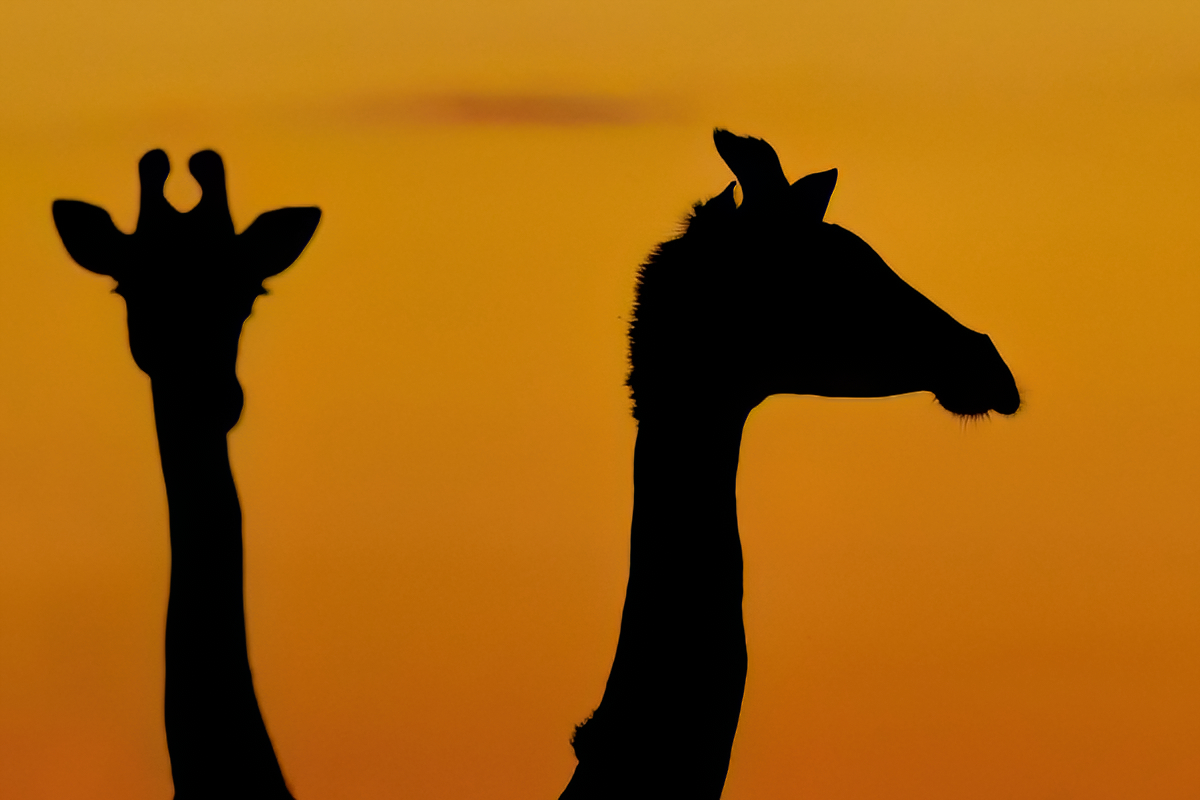
One of the ultimate wildlife shots is to photograph the animal silhouetted against a fiery, orange sunset. This can be achieved by exposing for the background, rather than the animal. The result is a lovely orange sunset (rather than a totally burnt-out background), with the animal rendered as a deep black silhouette on the horizon. This can be a tricky shot to achieve, and it works best with big animals like giraffes!

Giraffes at sunset

09 – Good Gear

There are a number of photographic accessories that are invaluable when photographing wildlife. Handholding a large lens can be quite difficult and tiring, especially for long periods of time. If your subject is stationed in one spot (the subject could be preening, displaying, bathing, feeding etc), then a tripod with some type of gimbal, like a Wimberley, is highly recommended. A gimbal lets you move the camera and lens in all directions quite easily without getting sore arms and shoulders. If your plan is to walk a reasonable distance with a heavy camera and lenses, a carbon fibre monopod with a dedicated monopod head might be the way to go. Much lighter than a tripod, a monopod doesn’t offer quite the same degree of stability but it does give you more freedom to move around. Another useful piece of equipment is a photographer’s beanbag, handy for stabilising heavy lenses. Beanbags can be filled with rice, birdseed or beans and can be placed on car bonnets or half-opened car windows, rocks or fence posts. You’ll be amazed at how much beanbags help minimise the movement of your camera and lens, allowing for shots to be taken at quite low shutter speeds. I recommend using some sort of neoprene covering for your lenses and tripods, to protect them from scratches, bumps and dust. I use a brand called ‘Lenscoat’. I also suggest some type of rain cover for your camera and lens, especially if you do a lot of outdoor photography.

10 – Keep Moving

For many photographers, it seems the most important aspect of wildlife photography is purchasing a lens with the longest focal length. As much as it is beneficial to own a lens with a longer focal length, especially when trying to photograph smaller birds and wildlife, great shots can also be taken of animals as part of a larger landscape. You might be in a place like Antarctica, photographing a stunning, icy vista, with a penguin just visible in the foreground. The viewer’s eyes naturally go towards the penguin, then to the rest of the scene. Rather than a close up-image of an animal, photographed with a long lens and wide aperture (which creates a smooth, blurred out background), an image of an animal, taken with a wide-angle lens gives you a sense of space. It clearly shows the environment the animal lives in and gives the image a sense of scale.

Male lion

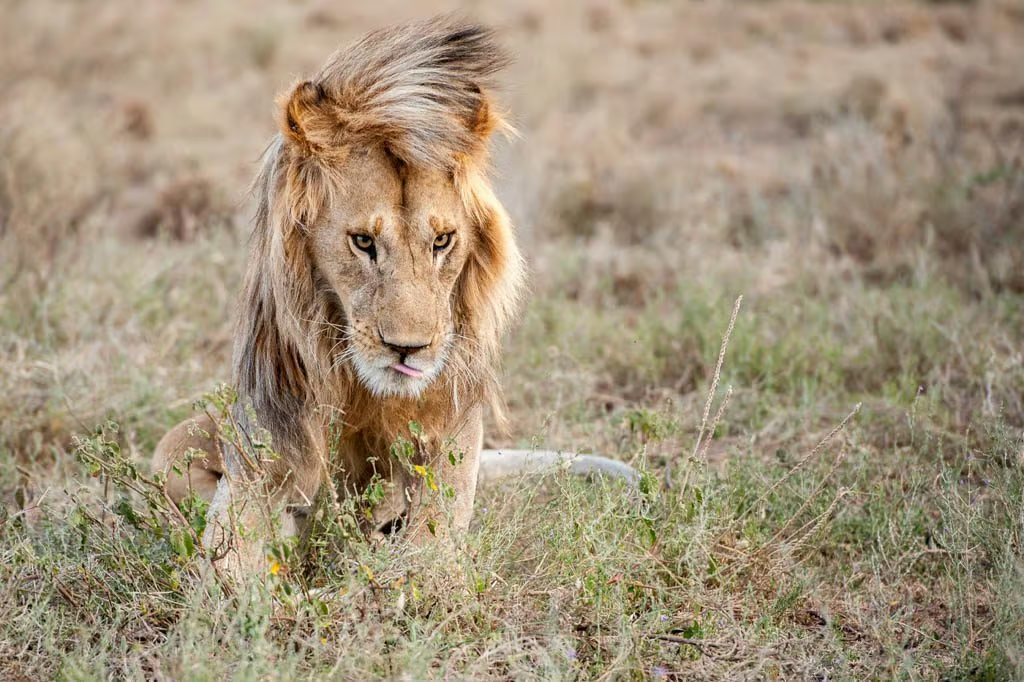
This male lion, in Tanzania, Africa was being very lazy indeed. He had been sleeping for quite a while and after hearing a noise, lifted his head. Luckily for me, a wind gust at the precise moment he lifted his head, caused his mane to blow in the air. Just as I was about to take the shot, he poked his tongue out. Nikon D700, 70-200mm @ 200mm, 1/400s @ f/4, ISO 800, hand-held.

11 – It’s All About the Light

One aspect of wildlife photography that cannot be underestimated is shooting in decent light. Rarely do I head out in the middle of a sunny day to photograph birds. Post-dawn and pre-dusk light is the most subtle and evocative. No harsh shadows and over-blown highlights, just even, diffused light on your subject. It may not always be possible to photograph pre-dawn or pre-dusk. You may happen to be in an environment, with lots of wildlife around to photograph, and it’s the middle of a bright, sunny day. In these instances, experiment to see what works best. Photographing with the sun behind you (or to the side), usually produces the most consistent results but shooting into the sun can create some interesting results too. I like to move around and take my wildlife shots at various angles to the sun, eventually settling on a position that works best.

12 – Think Outside the Box

One of the joys of photography is that there are so many different ways to take images. Try different compositions and lighting and experiment with different lenses too. Sure, most photographers think of telephoto or zoom lenses with longer focal lengths for wildlife but why not try a wide-angle lens really close? If your subject is used to people, more likely at a zoo or wildlife park, then try getting down to eye level, very close and getting a totally different perspective. It’s a lot of a fun and you may well be surprised at the results! I hope the photographic tips and techniques in this article will help you take your wildlife photography to another level. Enjoy your photography!


For photographers looking to hone their wildlife photography skills and immerse themselves in African wildlife at the same time, I run a regular Kenyan Maasai Mara Photo Safari. Make sure to register early to secure your place.

Bonus: 5 Traps for Wildlife Photographers

There are a few pitfalls to watch out for when photographing wildlife:

  1. One of the most common pitfalls is concentrating so hard on the subject that you miss unsightly distractions in the background. Watch out for trees and other structures that appear to be sticking out of the subject’s head.
  2. Photographing a bird straight up a tree from directly below doesn’t look good. Try moving back; it will give you a much better angle to photograph.
  3. Watch that shutter speed! So often I see people photographing in low-light conditions and hear the sound of a very slow shutter going off; guaranteed blurry shot! Increase the ISO (to increase the shutter speed), stabilise the camera and lens or use flash.
  4. Don’t always try to fill your frame with the animal. Sometimes, taking a shot of a stunning scene, where the animal is a small part of it, can make for a great environmental image.
  5. When photographing in a zoo or wildlife park through glass using flash, turn the camera/lens/flash at a 45-degree angle. This stops the flash bouncing off the glass and straight into the lens, causing unsightly flares and ruining the shot.

If you have a passion for African wildlife, nature or travel photography and would love to go on a specialised small-number, professional African photo safari, please get in touch with Michael Snedic at WildNature Photo Expeditions. You can call him on 0408 941 965 or fill in this Contact Form and he will get back to you ASAP.
The Regent Bowerbird: A Taste For Pomp & Pageantry

The Regent Bowerbird: A Taste For Pomp & Pageantry

Regent Bowerbird

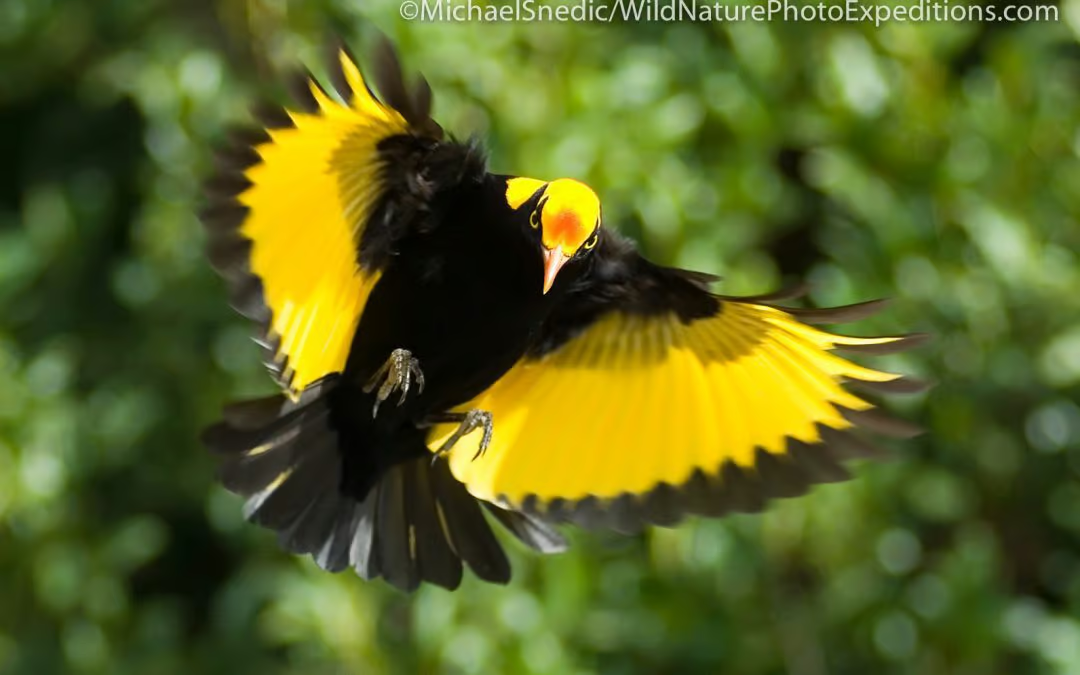
As regent of England in the early 1800s, the future George IV redecorated Windsor Castle and Buckingham Palace, built the highly ornamental Royal Pavilion at Brighton and adored pomp and ceremony. One of his alleged namesakes, Australia’s majestic black and gold regent bowerbird, exhibits somewhat similar inclinations

I had been bird-watching since dawn, my binoculars scouring the rainforest canopy. The morning was serene, the air crisp and clean. Suddenly a flash of black and gold grabbed my attention. I followed the bright movement until it stopped in a nearby tree. My first ever sighting in the wild of an adult male regent bowerbird (Sericulus chrysocephalus)! I was in a subtropical rainforest remnant known as the Big Scrub Flora Reserve near Rocky Creek Dam in northern New South Wales. The sight of that stunning, colourful bird contrasted against the various shades of green and brown in the canopy is a memory I will always savour.

The other bird has the blues

In much of its habitat, the regent bowerbird lives side by side with the more common satin bowerbird (Ptilonorhynchus violaceous). The males of both species exhibit the unusual and distinctive behaviour of bower building: creating a special structure solely for the purpose of enticing a female (or females) to mate with them. Glossy black male satin bowerbirds are famous for collecting a sea of blue ornaments – leaves, flowers, snail shells, bottle caps, clothes pegs – to decorate their bowers, which are often quite visible. Over many years of guiding, bushwalking, bird watching, photographing or assisting wildlife documentary makers, I have found dozens of satin bowers, many active, in forests, clearings, near buildings, roads and car parks.

Over that same period, I have only ever found four regent bowerbird bowers.

It’s not due to a lack of looking.

The regent bowerbird prefers subtropical rainforests on the coasts and hinterlands of Queensland and New South Wales, although it is found in warm temperate rainforests as well. Much of their former range has been destroyed by clearing, but fortunately, they can still be found in protected areas, including coastal rainforests at Iluka (coastal NSW), the Nightcap and Border Ranges (NSW) and Lamington National Park (Qld) – one of the best wildlife photography locations in Australia, in my opinion. Over years of observation, I have noticed they will readily venture out to the edge of the forest, but most sightings have been within the lushness of the subtropical rainforest.

The birds are predominantly fruit eaters. You can see them foraging on the forest floor amongst shrubs, trees or vines, or in the canopy. Along with native berries, such as lillypillies, quandongs and satinash, they will readily feed on exotic species, such as inkweed or lantana. Depending on the availability, regent bowerbirds will also feed on larger fruits such as native fig and quince. Rather than swallowing these fruits whole, as they do with the berries, they will pick at the flesh of the ripened fruit.

Dried treats and seasonal fruits

They are also partial to dried fruit such as currants and sultanas. O’Reilly’s Rainforest Retreat, situated in Lamington National Park, south-east Queensland, is world famous for feeding throngs of wild regent bowerbirds that fly freely around the guesthouse. For nearly five years, part of my job as a nature-based guide was to feed these birds during the early morning bird walks, much to the delight of the guests. Nowhere else in the world can people experience these magnificent birds at such close range. We only ever fed the regent and satin bowerbirds currants and sultanas and I must stress that within Lamington National Park itself (which surrounds the privately owned O’Reilly’s), the Queensland Parks and Wildlife Service strictly prohibits the feeding of any native animals.

Putting into action my advice on how to photograph birds in Lamington National Park, I noticed what appeared to be a regular pattern of regent behaviour at Lamington. They would land in the shrubs and trees of the guesthouse and wait for their daily feed. Once they had eaten, they would invariably fly off into the forest, in search of their natural fruit and berry diet. Around December each year, they would slowly withdraw into the forest, returning to the guesthouse in numbers around April or May. We thought that due to a plentiful supply of native fruit in the forests through summer and early autumn, the birds did not need to supplement their diets. Once fruits start to diminish, they come in search of the extra dried fruit.

Although predominantly frugivorous, the regent female, who raises the chicks on her own, will often catch beetles, moths, cicadas and other insects for her young.

Back to the bower

The male regent’s bower is smaller than that of its satin cousin. The bird uses various sized twigs that cross each other in all directions, creating a fairly solid structure. Rather than place decorations around the outside of the bower as the satin does, the regent tends to place an assortment of trinkets and baubles in the centre of his bower. These are neutral in colour and may include different types of snail shells, cicada casings or castings, shiny leaves and berries.

Some earlier literature on regent bowerbirds suggested that the extreme rarity of finding a bower meant the bird was in the process of discarding the practice of bower building altogether. Although this theory has been overturned, finding an active bower remains a rare occurrence. The male will usually choose a thick, scrubby part of the rainforest undergrowth in which to position his bower. It will need to have clear access to the allimportant females he is trying to woo but overall, concealing the bower is a priority. One possible reason for the seclusion could be the male’s extremely bright colours which could easily attract predators.

One, two, three, four

Of the four bowers I’ve found, three were covered by dense vegetation – it is easy to see how searching for them can be a difficult task.

One bower lasted only six or seven days before the male completely destroyed and relocated it. Sir David Attenborough’s film crew captured footage of the next active bower when they were in Australia in November 1999. Sir David visited Lamington National Park in order to film the behaviours of both the regent and satin bowerbirds as part of a documentary on bowerbirds of Australia. I had the great fortune and privilege of assisting him in finding a regent’s bower as well as assisting the film crew.

I found my third bower while bird watching in the Border Ranges National Park in northern New South Wales. I decided to rest on a log, when a flicker of gold in the scrubby undergrowth to my left caught the corner of my eye. I slowly picked up my binoculars. To my surprise and sheer delight, there was a regent bowerbird male adding sticks to his fully constructed bower.

After years of trying to capture some photos of a regent bowerbird working his bower, my opportunity finally arrived when I found my fourth bower. Male regent bowerbirds will usually destroy and move their bowers within a week of construction. This particular male was accustomed to the presence of humans and had apparently decided to stay in one spot for a couple of weeks. Thus, I was able to set up a camouflaged hide only four metres from his bower.

The sight of that stunning, colourful bird contrasted against the various shades of green and brown in the canopy is a memory I will always savour.

He would be gone for hours at a time, then fly in out of nowhere, heading straight for his bower – usually with fresh sticks to add to the structure or new decorations to adorn its centre. He was completely oblivious to my presence and was dedicated to diligently improving or beautifying his ‘love shack’. Beak brimming full of berries or greenery, he would position himself inside the bower, mix the berries or greenery with saliva and proceed to paint the inside structure with his beak and tongue. The male’s goal is to present the bower in a way that will attract any passing females. I wonder if he consulted with an interior decorator? With patience, I was able to capture some images of this rarely seen or photographed behaviour.

Song and dance man

The regent, like other bowerbirds, is polygamous rather than monogamous. His aim is to attract as many females as possible to his structure. Once a female arrives, the male puts on a stunning performance. With wings spread, head lowered and, often, some form of decoration or ‘gift’ in his bill, he will energetically strut and cavort in the most pompous of fashions. At the same time, his chatter and mimicry increases to an all-out frenzy.

If the female is impressed with the bower, its decorations and the high-energy performance, she flies down and enters the bower, signalling her willingness to mate. The male immediately flies to the bower and mounts her. In the blink of an eye, it’s all over and the female flies off.

Solo effort

After mating, the female regent fends for herself, building the nest, incubating the eggs and rearing the chicks. Saucershaped nests of twigs and rootlets are generally constructed amongst dense rainforest trees. The female normally lays two or three eggs, incubating them for 20 to 21 days and feeding the chicks on a variety of small rainforest fruits and an assortment of insects. They will fledge after another 20 to 21 days.

The male continues to woo as many females as he can throughout the breeding season. This method ensures that females only mate with the healthiest, most energetic males, passing on strong genes to the next generation.

Juvenile regent bowerbirds are subdued and plain: head, throat and neck are a lacklustre mixture of brown and greyish white with sporadic markings throughout; top of the head is a dull black; the mantle and wings are a greenish brown. Females retain a darker version of this colouration as adults, with dark eyes and an all-black bill. Males take around seven years to attain full adult plumage: a rich bluey-black body with a very vivid violet-blue on the breast, neck and rump area. The forehead, crown, neck and upper back are golden yellow, as are the majority of the primary feathers. The eyes are light yellow with a black centre and the bill is a golden yellow. There would be little dispute about naming the male regent bowerbird as the most stunningly coloured of all of Australia’s bowerbirds.


For photographers looking to hone their bird photography skills, I run a number of photography workshops at Lamington National Park, including my upcoming 4-day bird and flora photography masterclass and 3-day bird photography workshop! Make sure to register early to secure your place.

If you have a passion for African wildlife, nature or travel photography and would love to go on a specialised small-number, professional African photo safari, please get in touch with Michael Snedic at WildNature Photo Expeditions. You can call him on 0408 941 965 or fill in this Contact Form and he will get back to you ASAP.
Pacific Baza – The Gentle Hawk

Pacific Baza – The Gentle Hawk

I’ve just located a Pacific Baza’s nest and I’m going to set up the tower!’ Glen thundered down the phone line. For many years my friend and fellow wildlife photographer, Glen Threlfo, and I had hoped to photograph this beautiful bird of prey— here was our chance.

The Baza, also commonly known as the Crested Hawk, tends to nest quite high in the horizontal branches of various types of eucalypts or melaleucas. Its nest is often inaccessible, but this one was relatively low and positioned on the outer branches of a casuarina tree. Most importantly, it was in an area suitable for positioning a photographic tower, at the edge of a patch of Gold Coast hinterland rainforest. Our tower was assembled piece by piece, with each 2 m section bolted on top of the next, until the 20 m was reached. To keep it from toppling over, especially during windy conditions, we attached around 17–18 guy-ropes. From the hide perched on top, we were able to view the nest at eye level from a distance of around 4 m.

Any birder who has had the privilege of seeing a Pacific Baza at close range would have to agree that they are one of Australia’s most attractive birds of prey. Their bright yellow eye, distinct crest, and brown and white barred chest make them one of the most easily recognised raptors. Their distribution ranges from coastal northern Australia to as far south as Sydney, and they are also found in Indonesia, the Solomon Islands, New Guinea and nearby islands.

The pair that Glen and I were watching had constructed their nest in the usual manner: no more than a pile of loosely stacked sticks covered with a layer of green-leafed eucalyptus twigs. Yet, the untidy structure was kept clean. Once or twice a day the male brought a fresh spray of eucalyptus leaves. From a very early age, their single chick began to release its droppings over the side, rather than soil the nest. It was an amusing sight to see the chick, only a few minutes after it had eaten, edging to the side of the nest, backside raised, ‘aiming’ at a nearby branch!

The Bazas were highly protective of their single chick, but gentle at the same time. Often, one parent would be away feeding while the other sat guard in a nearby tree. Most other birds kept their distance, although some would fly into the ‘no-go’ zone near the nest. Then, either parent would fly casually to where the trespasser was perched and land nearby, displaying no aggression whatsoever. I must add, though, that not once did I see an intruder stay around long enough to find out!

The parents shared hunting duties, with breaks between feeds lasting anywhere from 10 minutes to over an hour and a half. They brought in a wide variety of insects (mainly stick insects and large grubs/larvae) as well as a few small frogs. Considering the size of the chick in its early stages, it was amazing to watch it swallow such huge insects in one go.

Often, I observed either parent searching for insects to bring back to feed their chick. They used such precision and agility, swooping on insects that were in the outer foliage of nearby eucalypts. On a few occasions the male hung upside down on the drooping branches, wings outstretched. He would scour the leaves carefully, returning to the nest minutes later with a beak full of morsels for his chick. On other occasions, he spent lengthy periods of time away and, on his return, would often land on the same branch, beak brimming with offerings, calling repeatedly with a ‘wi chu, wi chu, wi chu’. The female, who tended to do more of the feeding, would respond in kind and immediately fly over to perch next to him, take the food from his beak, and fly directly to the nest to feed the ever-hungry chick.

One morning it started to rain. I was sheltered by the hide but the tiny chick wasn’t so lucky. It was just starting to get wet when the female arrived. She ruffled her feathers, outstretched her wings and proceeded to create an ‘umbrella’. After a few minutes, she was totally drenched, but did not falter in her resolve to keep her offspring dry! As soon as the rain stopped, she flew to a nearby tree and spent the next hour and a half preening.

When the chick fledged about 33 days after hatching, the second egg of the original two-egg clutch still remained intact in the nest.

The hours spent sitting cramped in a hide 20 m above the ground, in all weather conditions, were certainly worthwhile. I learnt much from my close encounter with this placid raptor family. Capturing numerous photographs was the icing on the cake!

For photographers looking to hone their bird photography skills, I run a number of photography workshops at Lamington National Park, including my upcoming 4-day bird and flora photography masterclass! Make sure to register early to secure your place.

If you have a passion for African wildlife, nature or travel photography and would love to go on a specialised small-number, professional African photo safari, please get in touch with Michael Snedic at WildNature Photo Expeditions. You can call him on 0408 941 965 or fill in this Contact Form and he will get back to you ASAP.
Rainforest Eyes: A Walk in Lamington National Park

Rainforest Eyes: A Walk in Lamington National Park

A pair of Red Eyed Green Tree Frogs on a wet rock with a dark background at Lamington National Park

‘Oh, man, that’s so cool!’

‘No! It’s really gross!’

Cool? Gross? It’s all in the eye of the beholder on this three-day camp at Binna Burra in Lamington National Park with a group of primary school students from Brisbane. The camp is not just about ‘getting away from mum and dad for a few days’. Part of the school curriculum, it’s an opportunity to educate children about the environment and instil a sense of fun and excitement.

We’re two kilometres into an educational bushwalk on a beautiful spring morning, and we’ve just encountered a Carpet Python.

Off the Net and into the forest

One of the benefits of being a guide in a World Heritage-listed rainforest is that so many people are enthusiastic about and interested in the forest’s amazing diversity.

As a nature-based guide in Lamington National Park on a regular, casual basis, over the years I have guided hundreds of tours for people of many age groups, numerous nationalities and all walks of life.

As a casual educator, I also often helped facilitate and supervise the various camps at the environmental education centre.

Many of the children attending the camps live close to national parks, state forests, or local parklands, but there are always some who have never experienced the joys of bushwalking or spending time in a forest. They may, however, be proficient in the latest Playstation or Xbox and readily admit that most of their spare time goes towards computer games, surfing the Net, or watching television. Personally, I feel that this is a real shame.

I found at an early age that the best way to observe or photograph nature is to find a spot, make myself comfortable, and wait for the inhabitants to come to me.

Using this in my guide work, I ask guests, especially children, to remain silent for short periods at a time and to use some of their senses to experience the joy of birds perched on a nearby branch, pademelons grazing in the undergrowth, frogs croaking, insects buzzing, a waterfall thundering over volcanic cliffs or water running through a rainforest stream, without the background noise of cars, industry. Many guests find the ‘wait- and-observe’ technique is not only rewarding in regards to the wildlife observed, but relaxing as well. I also recommend long, deep breaths of crisp, clean air to refresh, invigorate and cleanse your lungs and leave you feeling clear-headed.

Nature at its best

Often, at either Binna Burra Mountain Lodge or O’Reilly’s Rainforest Guesthouse, guests book in for a walk hoping to see or hear a particular animal. Not always, but sometimes, we have been very fortunate indeed. Some of my own highlights include the frenzied display by a male Albert’s Lyrebird, while a female looked on.

On the marvellous Toolona Circuit, a Spotted-tailed Quoll nonchalantly strolled past at a distance of only 10 metres. Once reasonably common within the park, the quolls are now classed as vulnerable.

Another reward came after hours of sitting in a camouflaged photographic hide. While I waited patiently for a male Regent Bowerbird to come to his bower, a male Riflebird (Lamington’s only bird of paradise) started his full display only metres from my lookout. He had no idea of my presence and had found an open branch in the sunlight where he could display to any adoring female in the area. The sight of this magnificent bird, wings fanned in display as the sun glistened off his reflective feathers is something I will never forget.

Lamington National Park has a vast array of fauna and flora. One moment you are walking through the misty rainforest, dazzled by brightly coloured fungi, mosses and lichens. Minutes later, you can be in a sun-blazed stand of eucalypts with Glossy Black Cockatoos calling in the distance, or you can be searching for the rare and elusive Rufous Scrub Bird skulking in the undergrowth of an Antarctic Beech forest where some trees could be up between 3000 to 4000 years old.

Relaxing into it

While conducting walks along the various tracks, I like to point out the animals I’ve spotted, but some guests, no matter how hard I try, simply cannot see the critters. I used to be quite baffled by this. Then, one day, it clicked! Some people had such hectic lifestyles that their minds were still in ‘hyperdrive’. On several occasions, guests staying in the park for a couple of weeks initially found it hard to calm their minds but as the days progressed, they started to relax and ‘go with the flow’. Some of them, after a week in the tranquil rainforest environment, would come back with amazing stories of the wildlife they had seen.

Generally, adult visitors to Lamington National Park come to enjoy guided walks and 4WD trips. They fly in from all parts of the globe to search for the park’s 130 or so species of birds. Zoologists study various animals, botanists become excited about plants, and photographers hope to capture that ‘special moment’. Some of my more memorable experiences have included helping IMAX and other wildlife documentary crews and spending some days with my lifelong inspiration, Sir David Attenborough, while he was narrating a documentary.

The snake turns

Children, however, even in environmental camps, sometimes feel they have no choice about being there. Their initial reaction may be boredom or disinterest, yet a little exposure to the wonders of the rainforest can get them leaping around with excitement.

Once we had passed the initial ‘cool’ and ‘gross’ stages of python discovery on our rainforest walk, a sense of genuine interest and curiosity crept in amongst the students. We didn’t allow them to touch the snake, but they could clearly see its length and the patterns on its body. ‘Are they slimy?’ the kids asked. ‘How big do they get?’ Many had seen photos of pythons, or seen images on television, but few had seen a real live Carpet Python. Their interest was piqued. They were ready to discover more.

I would rather be enthusiastic than preach to kids on these walks, so I was thrilled to hear a ‘thump, thump’ just to my left — the distinct ‘warning’ thump of a Red-necked Pademelon. The girls especially had been hoping to see one of these ‘cute’ animals on our walk. We were doubly rewarded: not only was there a pademelon peeping at us through the undergrowth, but she had a joey nearby. You should have heard the ‘oohs’, ‘ahhs’ and clicks of cameras. The script could not have been written better!

While most students were interested in any wildlife sightings, I was pleased to see a couple of ‘junior naturalists’ in the making. One particularly observant boy found an amazing array of insects, trapdoor spider tunnels, varieties of colourful fungi and lichens, to name but a few. His passion and enthusiasm seemed to spur some of the others to be more observant as well. Although it wasn’t mentioned during the walk, I could sense that the Playstation and Xbox games weren’t being missed in the slightest!

For photographers looking to hone their skills, I run a number of photography workshops at Lamington National Park, including my upcoming 4-day bird and flora photography masterclass! Make sure to register early to secure your place.

If you have a passion for African wildlife, nature or travel photography and would love to go on a specialised small-number, professional African photo safari, please get in touch with Michael Snedic at WildNature Photo Expeditions. You can call him on 0408 941 965 or fill in this Contact Form and he will get back to you ASAP.
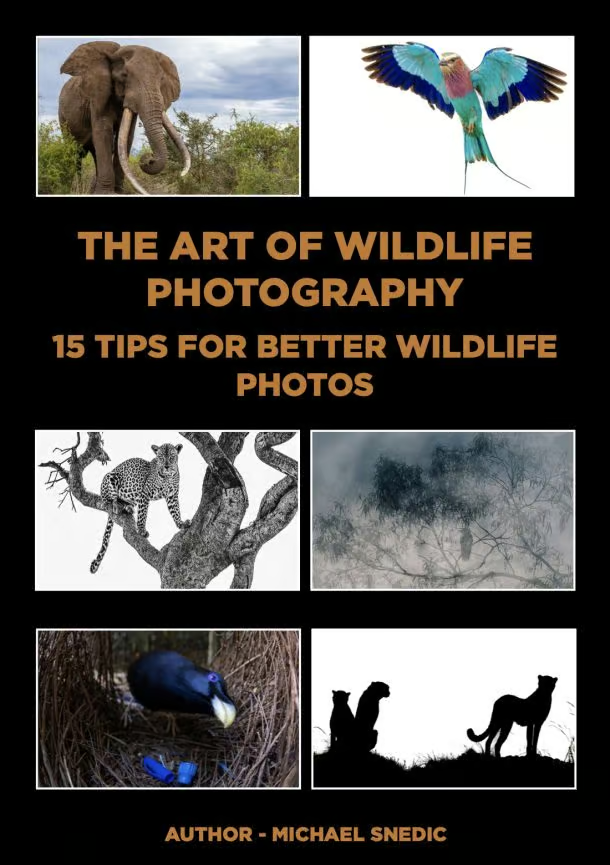
Would you like a FREE copy of my new Ebook?

Download Button

Would you like a FREE copy of my new Ebook?

You have Successfully Subscribed!